Saturday, February 17, 2007

Which shall I read first?


Titles are from IVP's Contours of Christian Theology series.

Christless leisure

I've already added this quote to
Underlined Bits, but thought it was worth putting here too.

Jesus Christ is refreshing, but flight from him into Christless leisure
makes the soul parched. At first it may feel like freedom and fun to skimp on
prayer and neglect the Word, but then we pay: shallowness, prayerlessness,
vulnerability to sin, preoccupation with trifles, superficial relationships, and
a frightening loss of interest in worship and the things of the Spirit.

John Piper (1997) A Godward Life, in ch.34 "Setting Our Minds on Things Above in Summer"

Friday, February 16, 2007

Notes on a few websites

  • This week is China week at the Times (here). You can download lesson podcasts in basic conversational Mandarin. Very exciting!
  • Mark has begun a new blog. Underlined bits is simply a space where contributors can share "thought-provoking and inspiring quotations from evangelical writings"
  • Oak Hill Theological College has just appointed a new principal, to start when David Peterson returns to Australia in the summer. If you want to know who he is, click here.
  • I couldn't resist adding in an old favourite. At Nottinghamshire Birdwatchers, you can see what birds have been seen around Notts recently. See similar sites for Derbyshire, Lincolnshire and Leicestershire.
  • I also recommend The Pension Service and HM Revenue and Customs. Helpful information about pensions, taxes etc.

Blackbird in our garden!


Monday, January 29, 2007

News. Bird in garden!


I know that this is a rubbish photo. But there is a blue tit in it, and it is IN OUR GARDEN. Can you spot it? As we very rarely have birds in our garden (see here and here), this is quite an event. In fact, my entry for the RSPB Great Garden Birdwatch comprised 4 house sparrows and two blue tits; not impressive.

Actually, we have had blue tits quite regularly recently - probably because of the food we have put up. We also had a grey wagtail in our back garden a week ago, and before that a female blackcap, and to be honest, they are rather impressive - at least for our garden! I have never seen a blackcap in January before; it's mostly a summer migrant, but "increasingly spending the winter in the UK." (source)

Sunday, January 28, 2007

The need for a deep knowledge of God

I have been studying the early chapters of Isaiah recently (Our current homegroup Bible studies are in Isaiah, as is our assistant pastor’s current sermon series.) I have been particularly struck by the depth of Isaiah’s vision of God – in His self-sufficiency, His sovereignty over all the nations of the world, His awesome purposes in judgment and salvation.

I have been struck by how vital it is that we know God, that we approach in some measure the depth of Isaiah’s own vision. Only a deep knowledge of God will sustain us in whatever trials may lie ahead of us in our lives (as individuals, families and churches). Only a deep knowledge of God will empower us for persevering obedience and service. Only a deep knowledge of God will lift our eyes from ourselves, and give us the desire to see His glory.

This morning our assistant pastor preached on Isaiah 6. Here are some further reflections on knowing God, drawn from Craig’s sermon:

- We need the right kind of knowledge of God; not the kind of me-centred knowledge that superficially acknowledges God but in reality treats Him as someone who can meet our needs, help fulfil our aspirations; someone who can be manipulated. True knowledge of God makes us realise how radically God-centred the universe is, and how radically God-centred we need to be.

- Nor is true knowledge of God a mere knowing about, an intellectualism that finds God a fascinating object of study but is not moved to obedience and godly fear and love.

- But true knowledge of God leads us to recognition of the huge distance between ourselves and Him – not merely the sheer ontological distance between the finite and the infinite, but primarily the moral distance between a pure, holy God and me – polluted, corrupted, disfigured by sin. The six woes of Isaiah 5, denouncing the utter corruption of the people of Judah, are followed by a seventh in Isaiah 6:5. “Woe is me”, declares Isaiah, “for I am a man of unclean lips and I live among a people of unclean lips”

- But that vision of God’s holiness and recognition of our sinfulness then leads in Isaiah’s case to the reality of forgiveness. To know God is to know oneself sinful but forgiven, polluted but cleansed, alienated but reconciled. A knowledge of God without the experience of personal forgiveness is not a true knowledge of God. So whereas the six woes of chapter 5 are interspersed with warnings of God’s certain judgment on their unrepentance, Isaiah’s confession is followed by cleansing: “your guilt is taken away and your sin atoned for.” There is no true knowledge of God that has not come to the Cross.

- Finally, to know God is to be ready to serve Him. To know God in his holiness, and experience his cleansing of our sin-stained lives, is to then be commissioned to live for His glory. A knowledge of God that does not issue in obedience and service is not true knowledge.

Reader! – these things may or may not be familiar to you, but if they are, be refreshed in your desire to know God better; persevere in pursuing God Himself. For we can drift, we can lose our focus; we can become consumed by fears and insecurities. At least I know I can, and have. I have needed a reminder of these vital truths. And perhaps you do too.


Note: Craig’s sermons on Isaiah can be found here. Please note, this is the temporary download page for Beeston Free Church. The sermons on Isaiah are the following files:
20070114am.mp3 (Isaiah 1)
20070121am.mp3 (Isaiah 2)
20070128am.mp3 (Isaiah 6)

Monday, January 15, 2007

Evangelicals and Public Theology

Oak Hill College is having a school of theology day on Wednesday May 17th which looks very exciting. The title is "A Higher Throne: Evangelicals and Public Theology" and there will be four parts, as follows:

Evangelical Public Theology: What on Earth? Why on Earth? How on Earth? – Dan Strange
Rutherford's Case for Christendom – David Field
New Living in an Old Creation – Kirsten Birkett
Gabbatha and Golgotha: Punishment by God and His Servant the State – Garry Williams

Full details can be found here

Wednesday, December 13, 2006

Whoops!!!

I have just discovered some comments that some people had put on my blog ages ago! I sincerely apologise to etrangere, thebluefish and fretboarder for allowing comments to be published MONTHS after you wrote them.

How on earth did they get missed?
Sorry!

Friday, November 10, 2006

What would you do if someone knocked over the a pyramid of tins in the supermarket?


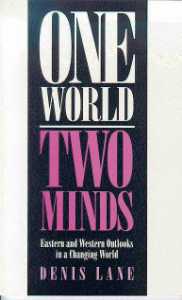
Denis Lane's booklet One World - Two Minds (OMF) is a great little book exploring eastern and western ways of thinking, and critiquing both from a Christian point of view. Here's one intriguing snippet:

"if a Westerner is in a market [in an Eastern country] and drops a basket of fruit and the fruit scatters over the floor, he may find people standing around grinning at him. But to the observers, to run and help him pick up the fruit would only underline the shame he has experienced in dropping the basket in the first place. By smiling at him, his Eastern friends are saying, 'Never mind, it is nothing; you have done nothing of which to be ashamed.' On the other hand, a Westerner standing by might be feeling guilt because he did not go to help his fellow human being gather up the fruit." (p.62)

Friday, November 03, 2006

Members of 'the thing'

The quote I posted last week intrigued me for its reference to 'the thing'. It just sounds so cool; kind of sci-fi. But the actual explanation is also fascinating:

The quote is from A History of Christian Missions by Stephen Neill (2nd ed. 1986; Penguin). It comes in the context of the spread of Christianity to Norway in the late 10th century, and the explanation of 'the thing' is as follows:

A thing referred at that time to a local assembly. Neill adds this footnote:

"This sense of the word is also found in Anglo-Saxon. The Oxford Dictionary gives as the meaning in Old Saxon 'assembly for judicial or deliberative purposes, conference, transaction, manner, affair, thing, object', a definition which is in itself a brief history of the process of development in language." (p.89)

!!