Thursday, August 03, 2006

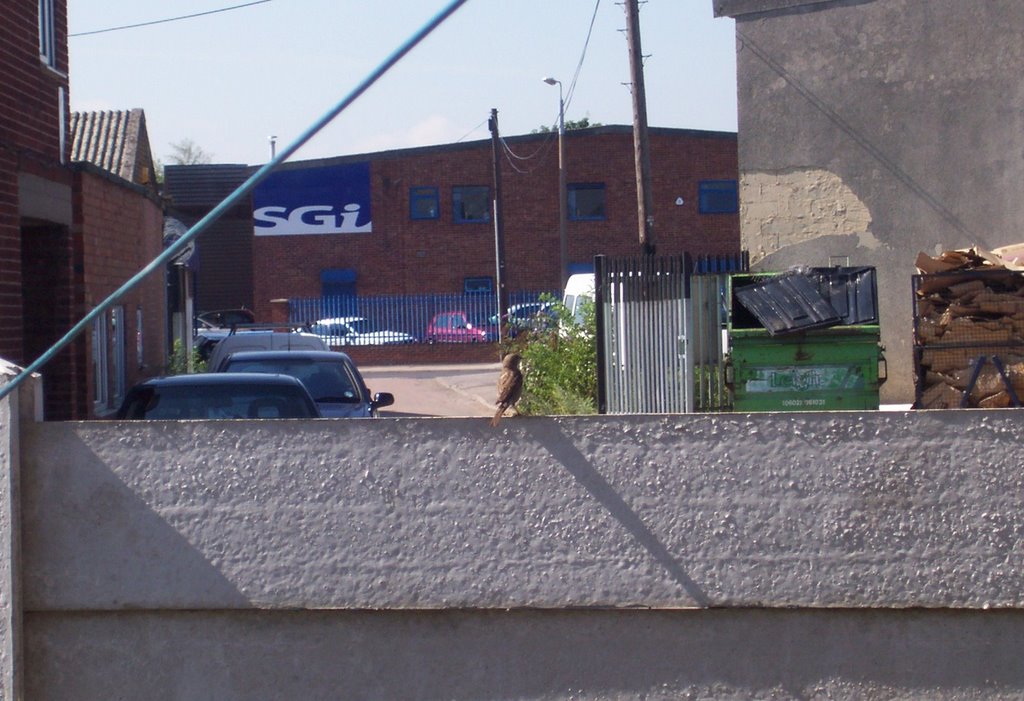
A house sparrow in our garden (2)

Back in January I wrote about the scarcity of birds
in our garden. (here) We've added a few more birds to our garden list since then - blackbird, starlings, greenfinch, and have had house sparrows passing through on several occasions. This house sparrow visited our garden today. (BTW, now you can see the industrial state our garden backs on to)


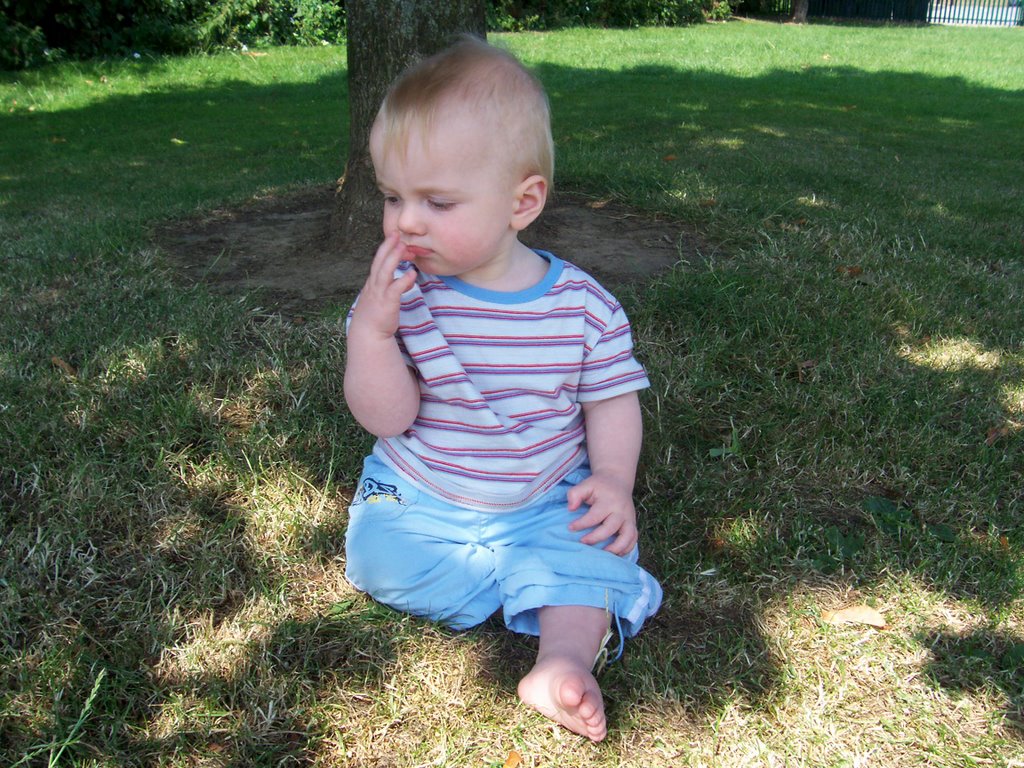
Happy birthday, Timothy


Timothy was 1 today. The photo of him is from a few days ago, though, as today's photos weren't very nice!

The moral goodness of business 2

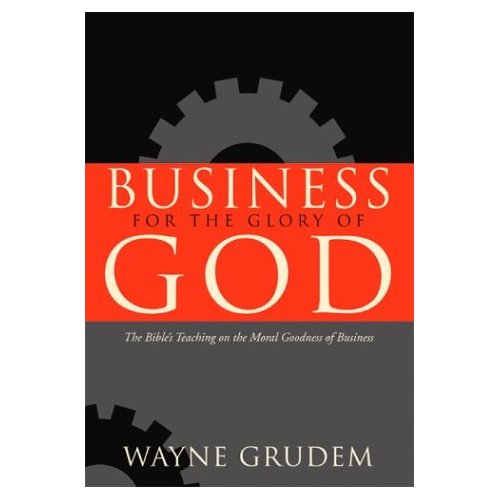
On my previous post on Grudem's book Business for the Glory of God, étrangère asked...

"Would it be good also for someone convinced that business is glorifying to God and whose church is pushing that God's inheritance for us includes material blessing to be pursued through business? Does it address or would it inadvertently confound that false teaching?"

Here's my reply:

Hi Rosemary,

I find that question quite difficult to answer, which is why it's taken me a couple of weeks! Grudem does not address that particular brand of teaching. His aim is quite modest. It is not, for example, “a book on ‘how to decide the hard ethical questions in business.’” – although incidentally he is working on such a book. The aim is to affirm the moral goodness of various aspects of business activity. I suppose then that it is written to persuade Christians who either think that business is morally dubious or who are not sure, uncertain whether Christians can engage in business with a clean conscience or not. In addition, it has probably been written to encourage Christians involved in business that their activities can be used to glorify God, and to encourage them to do so.

I think that the book does present an alternative (and better!) Christian vision of business than the view that teaches that God wants to bless our wallets etc. For one thing, the emphases are God-centred and other-centred.

But whether this would be a good book for someone in the situation to describe to read, well, I think that depends. Books can be misread, can’t they? Iain Murray, for example, has expressed dismay that his book The Puritan Hope has, in his view, been misused by certain people to back up a certain kind of postmillenialism related to theonomy.1 Business for the Glory of God could be read without due care and used to bolster one’s own ‘health and wealth gospel’. As I say, Grudem is not aiming to correct that particular error. However, read thoughtfully and with help from someone else, the book could be profitable for a person in your scenario. It may help destroy false dichotomies. If the person is (a) convinced that business can be used to glorify God, (b) hears the goodness of business affirmed by those teaching a ‘wealth gospel’ (c) has heard others say that the ‘health and wealth gospel’ is unbiblical and (d) therefore associates (c) with saying that business is bad, then to hear an alternative, positive vision of business that is biblical and not about ‘material blessings are our inheritance’ could begin to drive a wedge between the conviction that business can be used to glorify God and the material wealth teaching. But this is not necessarily evident from reading Business to the Glory of God since Grudem is not addressing that issue and there would therefore probably be a need for a helpful Christian friend (you?) to help him/her think through it.

So I think Grudem here does “inadvertedly confound that false teaching”, but subtly.

Dunno if that helps; I certainly welcome further comments!

___________
1. Listen to Murray discussing the book with Mark Dever here, from approximately the 20th minute to the 25th.

Friday, July 21, 2006

Arenaria interpres

Why have I renamed my blog "arenaria interpres"?

1. I wanted a name that more accurately reflects what this blog is about.
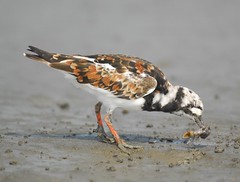
2. I wanted a name that would reflect my interest in birds. Arenaria interpres is the latin name for the turnstone, the bird that appears in the two photos here and here.
3. Mark suggested something in Latin!
4. I like the connotations suggested by the word "turnstone". Something about leaving no stone unturned.
5. I like the connotations suggested by the latin name, especially "interpres" (although the precise sense intended in the bird's name escapes me for the moment).

Arenaria: from the Latin arena, "sand," referring to the sandy habitats of many species (source)
interpres: [derived from inter, meaning between, and pres, a form of prehendo, prendo, meaning to catch, lay hold of, grasp, take. Literally: Caught in between]
A middle man, mediator, broker, negotiator, Interpres divum, messenger, Mercury, Explainer, expounder, translator, interpreter (
source)

I hope, though, that this blog would be of one who builds his house on the rock rather than on the sand. (Matthew 7:24-27)

Turnstones on shore


Turnstone feeding on fiddler crab


Saturday, July 15, 2006

The moral goodness of business


I have just read Business for the Glory of God by Wayne Grudem. It is short and packs a single, simple punch. Business is a dirty word, associated with all kinds of greed and corruption. Yet, Grudem argues, as Christians we can, and must, affirm that business activities are neither inherently evil not merely morally neutral, but morally good. Good not just for the opportunities that are provided for advancing the gospel, but good in themselves, for through them we can glorify God.

Grudem’s simple thesis is that business activities are fundamentally good and provide many opportunities for glorifying God, although they also provide many opportunities to sin. Of course there are many sinful distortions, but activities such as buying and selling, employing others, competition and making are profit are good.

I found this book very helpful, and would like to respond with two thoughts: firstly, Grudem has encouraged me to view those business-type activities that I am involved with as opportunities to glorify God and love my neighbour. Secondly, Grudem has persuaded me to encourage Christians who work in business or who are thinking of going into business.

In my own attitudes, I want to do what Grudem suggests is rarely done:

“when people ask how their lives can ‘glorify God’ they aren’t usually told ‘go into business’”
“When someone explains to a new acquaintance, ‘I work in such-and-such a business” he doesn’t usually hear the response, ‘what a great way to glorify God!’”

If you’re not convinced by my “review” then perhaps you need to read the book!

Unanswered Questions

One of my big answered questions, is “what is the significance of the black-tailed godwit?” This may sound rather bizarre, but stay with me. The black-tailed godwit is a wading bird that I find particularly fascinating, but any natural phenomenon could be inserted in the question. It is my way of asking ‘why do all the wonders of the natural world exist?’ Why so much variety? Such abundance? There is a character in C.S. Lewis’ That Hideous Strength whose ideal utopia is a moonscape: away with the clutter and irregularities of nature! Poirot has these tendencies too (see the dramatised version of the Mysterious Affair at Styles). But we don’t live in a cuboid purged of ‘dirty nature’. We live in a world of such wonder, such diversity, such drama. Why? Why has God made all this? I know the answer at a simple level – it is to bring glory to God. And such a world should elicit our wonder and thanks to Him who made it all. Yet I am sure that there are depths to that answer that will take eternity to explore.

Two things I find beautiful

I was thrilled to see arctic terns in Helsinki – not the mere fact of seeing them and hence being added to my lifelist (I once read of a serial birdwatcher who watched his first azure tits (bird no. 5000-and-something on his life list) for barely 10 seconds, so eager was he to get onto the next ‘tick’) – but the delightful watching of them, the oh-so-subtle differences that distinguish it from the common tern, the way one twice dived into the water barely yards away as we were praying on the beach, the way they flew – especially the way they flew, so elegant, so graceful. What a delight! What a thrill! Praise God for the arctic tern!

Yet I experienced something even more beautiful in Helsinki, the beauty of Christian fellowship, generosity, kindness and joy. We stayed with my sister-in-law’s family for a week before and after their wedding. It was a wonderful time, an experience of the most beautiful hospitality and generosity. And the wedding too was truly Christian, saturated with joy and thankfulness. Of course, not everyone there was a Christian, but the two families were, and there was a tone to the proceedings of purity, reverence and rejoicing in the goodness of God. I am grateful for this experience.

My prayers for my brother and his wife are that God would fill their lives and their home with joy, beauty and the love of God, and that through them people may be attracted to the Lord Jesus, as their lives adorn the gospel. And I pray that for ourselves too.

Creating the beautiful. The above thoughts made me think the following, first of all in the context of our own family, but then too for the church. We have an opportunity to build something beautiful, an opportunity, through the grace of God, to build something full of joy, goodness and love, something that will bring great glory to God. Is this not, in part, what we should be seeking to do in our churches? God’s purpose is to create something beautiful – a community of people, washed from their sins, reconciled to Him, knit into deep relationships with each other, a people amongst whom love and joy and goodness flourish, a people who are – to use Mark Dever’s phrase – to be “a display of God’s glory amongst a world of human sin and suffering.”1 What an amazing project to be involved with! What a privilege to be signed up by God for it through his gracious salvation! And how great it is that God is the one who is at work and who guarantees the project’s success!

PS If anyone is reading who knows us and wants to see some photos of my bro's wedding, send me an e-mail.

1 This phrase is part of the end-script found on the 9 marks interviews series

Thursday, July 06, 2006

Arctic terns in Helsinki


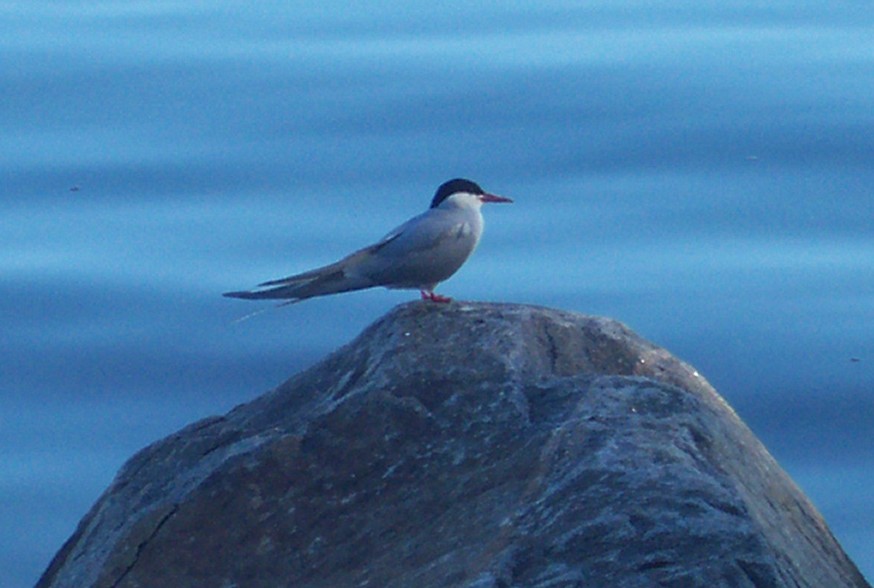
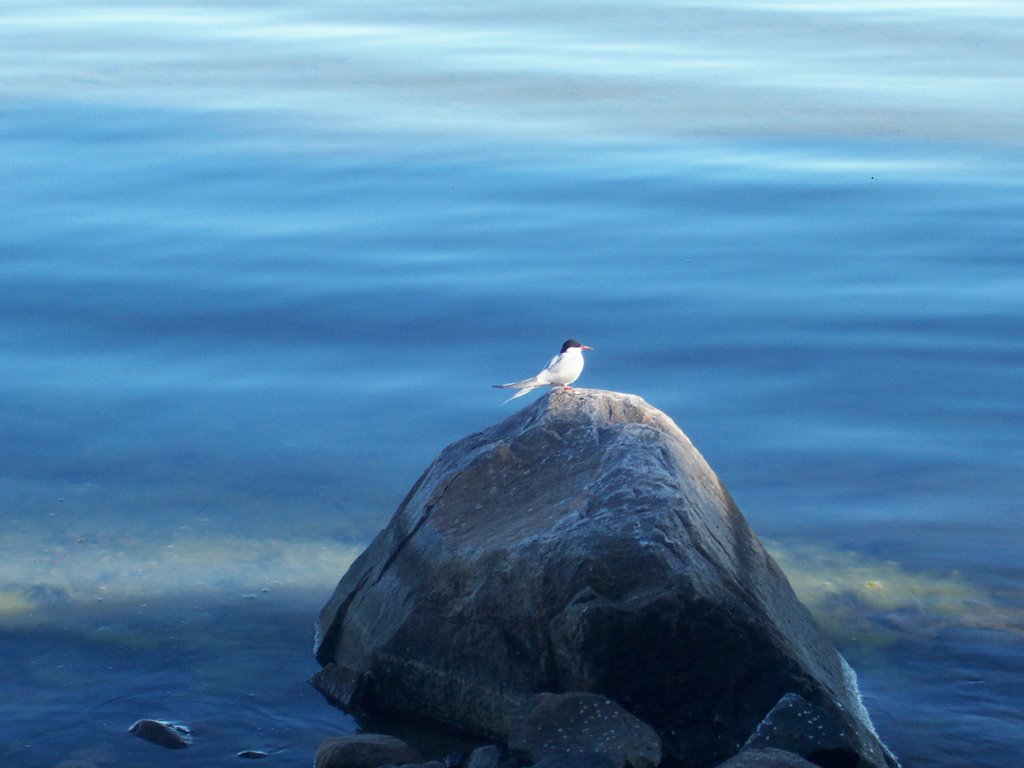
We have just been away for a week for my brother's wedding in Finland. Before posting anything else about the wedding, I must put up a couple of photos of an absolutely stunning bird I saw: an arctic tern sitting on a rock barely metres away from the shore round the back of the hotel where the wedding reception was held.

Arctic terns are beautiful. In flight they are deliciously elegant, even more so than the common tern which in turn (forgive the pun) is vastly more graceful than any gull.

We do get arctic terns in the UK, but they are rather elusive (I've never seen one). Common terns are much commoner!

Arctic terns are difficult to distinguish from common terns, but the following features are indicative:

1. arctic terns have very short legs

2. the arctic tern's tail streamers extend beyond the wings when standing

3. the arctic tern's bill is a deeper shade of red while the common's also usually has a black tip

4. the arctic tern's underparts are slightly greyer

5. the arctic tern's head is slightly rounder

Most of these features, but especially 1 and 2, are just about evident from the closeup photo.